
Lenny B’s Knowledge Library for Creators
Real-world guidance on audio, voice, workflow, positioning, business, marketing, and audience growth—built from the problems I solve, the systems I use, and the lessons I’ve learned helping creators turn their skills into stronger work and better opportunities.

Imagine making a reservation at a restaurant, arriving hungry, and discovering that the chef hasn’t started cooking.
He’s still researching knives.
He’s comparing brands, watching reviews, and wondering whether the more expensive knife would help him prepare a better dinner.
Meanwhile, you’re wai...

You can record at the right level, apply excellent processing, and deliver a technically clean file—and still leave the listener feeling very little.
The words are clear. The volume is appropriate. But something is missing.
Are you connecting with what you’re saying?
When I help someone with thei...
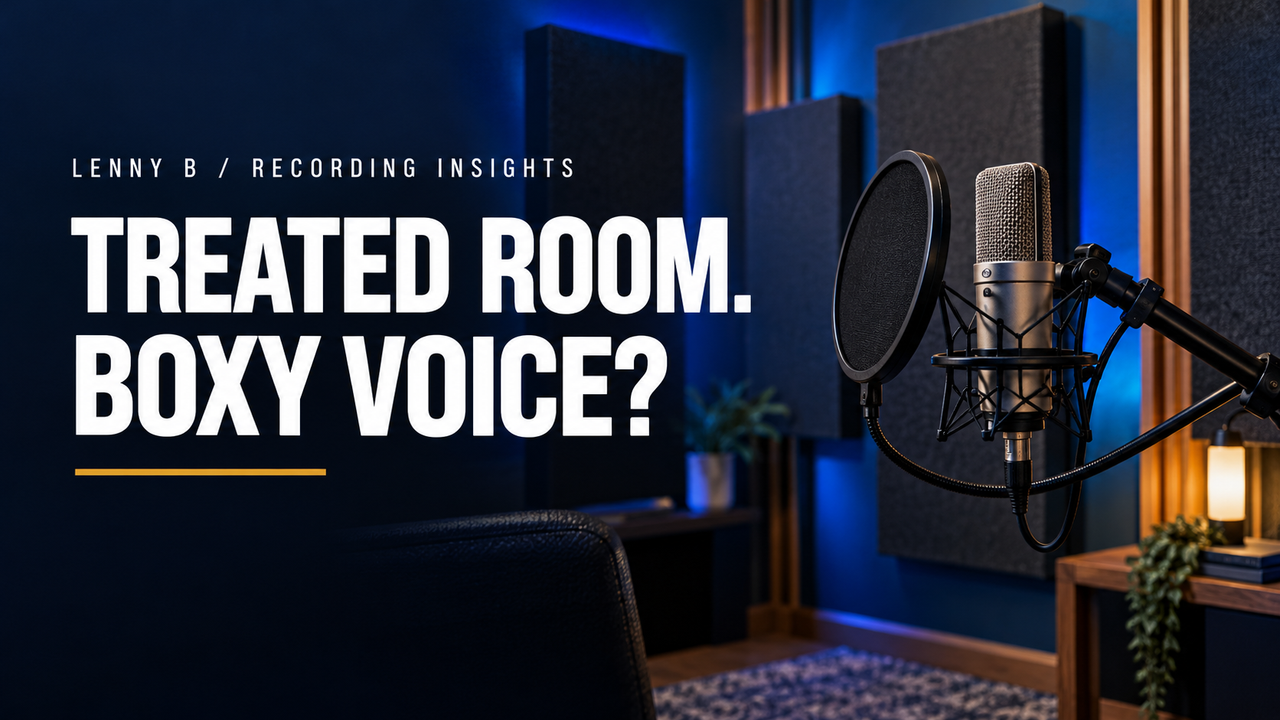
A treated room can still produce a voice recording that sounds boxy, hollow, or more distant than you expected.
That does not automatically mean your microphone is wrong or your acoustic panels are useless. It may mean the microphone, your position, and the treatment are not working together as wel...
During a recent conversation with one of my business and marketing coaching clients, I remembered a story I had not thought about in quite a while. We were talking about the difference between chasing any available work and deliberately building a business around the work you want to do. That conver...
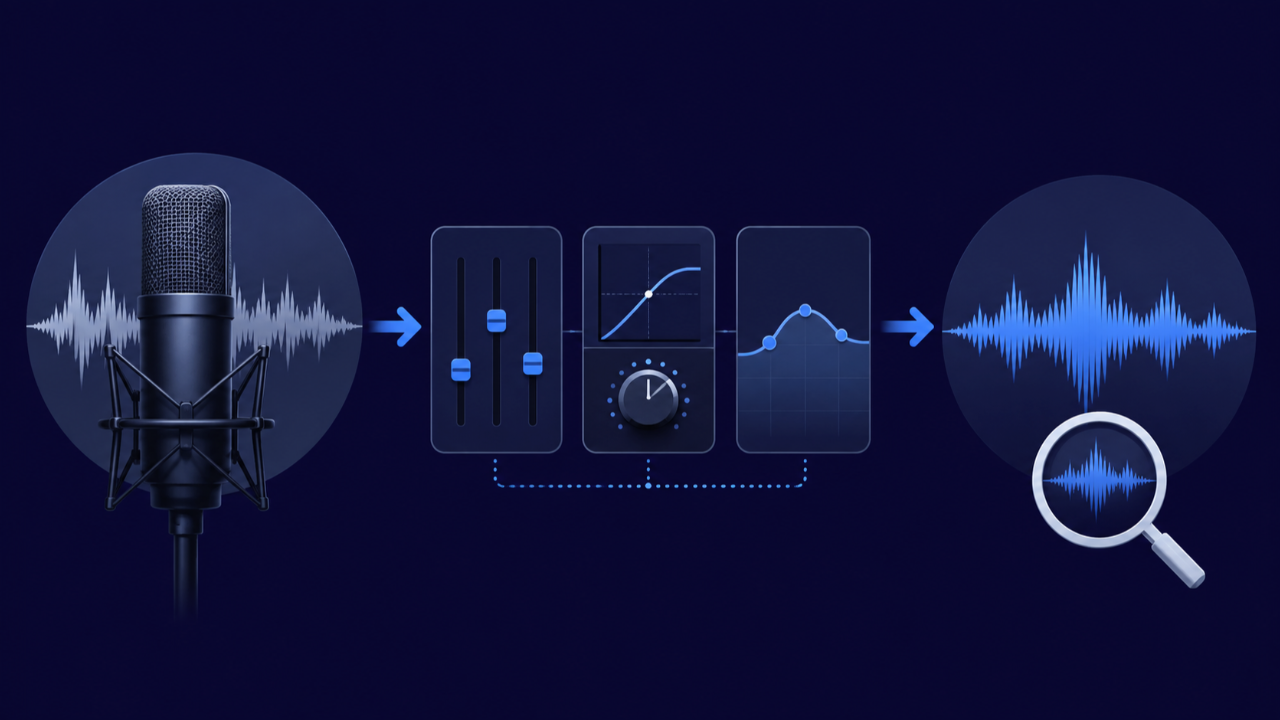
Voice-over processing is the use of audio effects such as EQ, compression, de-essing, limiting, and other processors to turn a raw voice recording into a polished, stable, and balanced final product that is easier to listen to and better prepared for delivery.
The goal is not simply to make a voice...
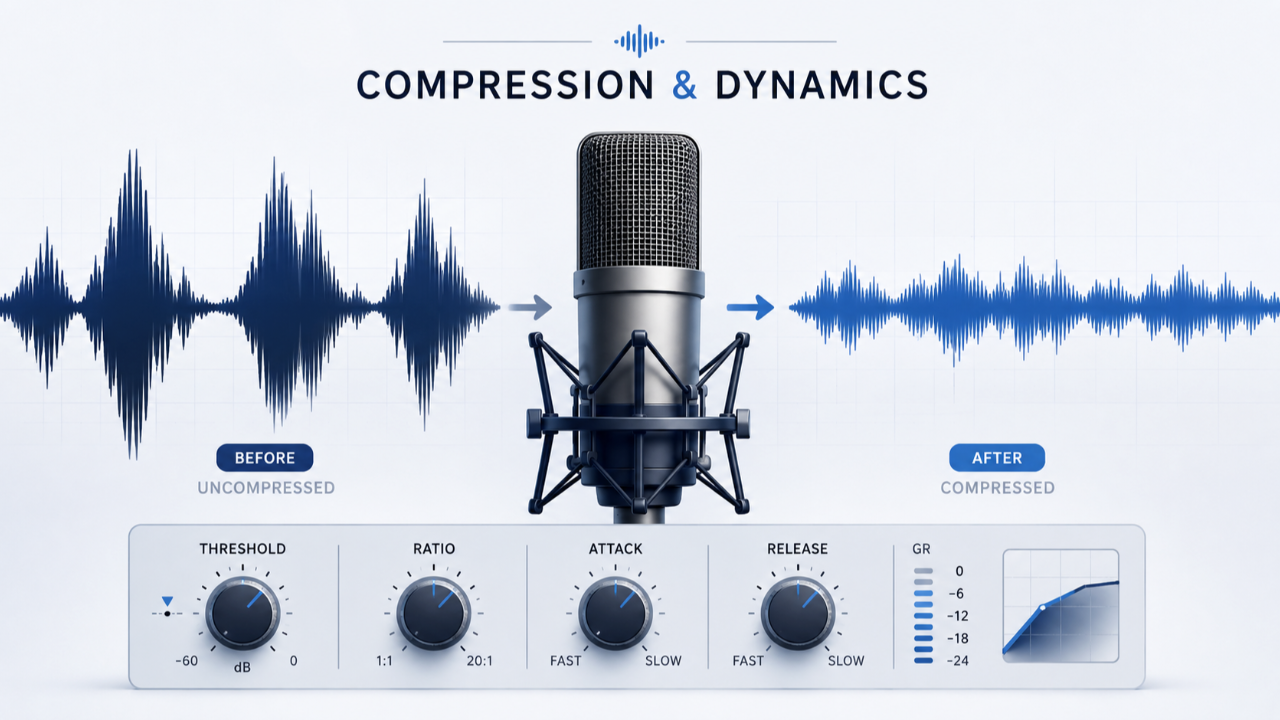
After EQ, compression is probably the second most powerful processing tool you can use to shape the sound of a voice recording. EQ changes the tonal balance of the voice, while compression changes the dynamic relationship between the louder and softer parts.
That sounds simple, but compression is ...

I spend a lot of time helping content creators and people creating content with their voice to attract, grow, and retain an audience of ideal customers. Sometimes the problem is technical. Sometimes it’s business or marketing. And sometimes the biggest obstacle is simply recognizing how much opportu...

A lot of people start marketing too early.
They ask:
What should I post?
What does the audience want?
What kind of content will get attention?
What platform should I use?
In my approach, those are downstream questions.
Before you can create effective marketing, you need to understand who your ideal...
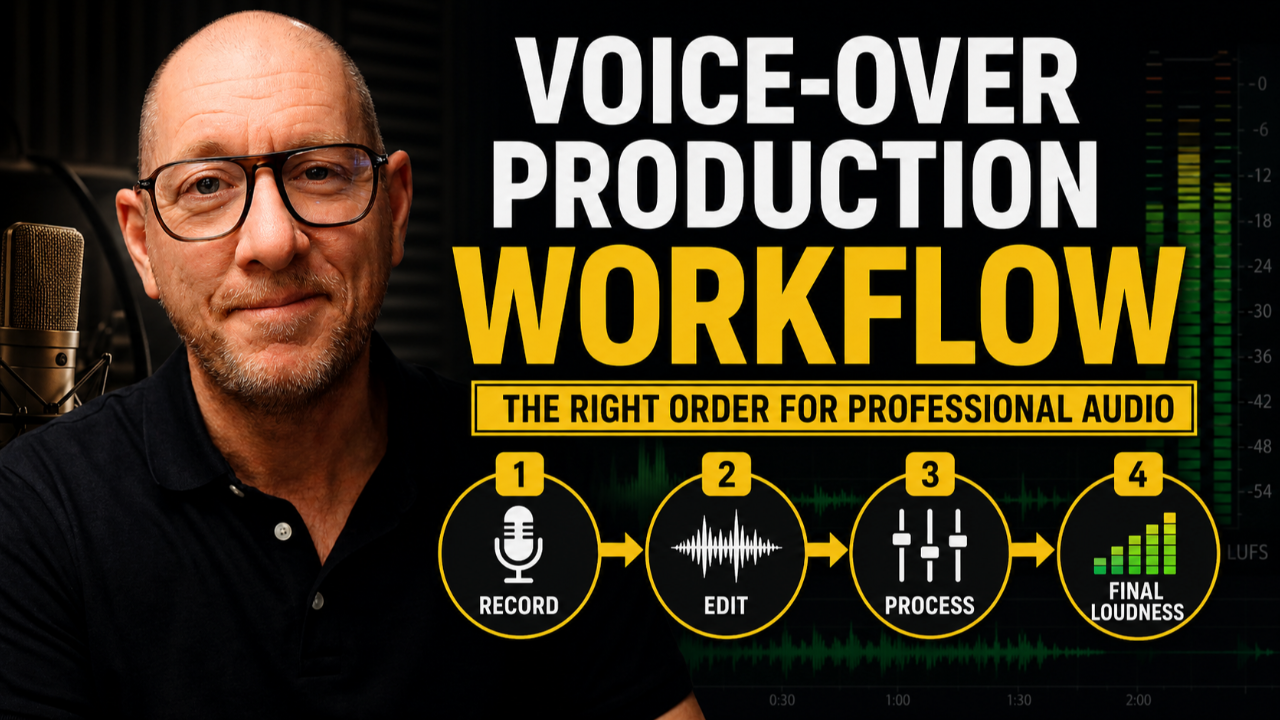
A professional voice-over recording is not created by one plugin, one microphone, or one processing preset. It is the result of a series of production steps performed in the correct order.
That order is your voice-over production workflow — your production procedure.
Workflow determines when you r...

I spend a lot of time helping content creators and people creating content with their voice to attract, grow, and retain an audience of ideal customers. Sometimes the problem is technical—sound quality, microphones, processing, workflow, or mastering. Other times it’s messaging, positioning, content...
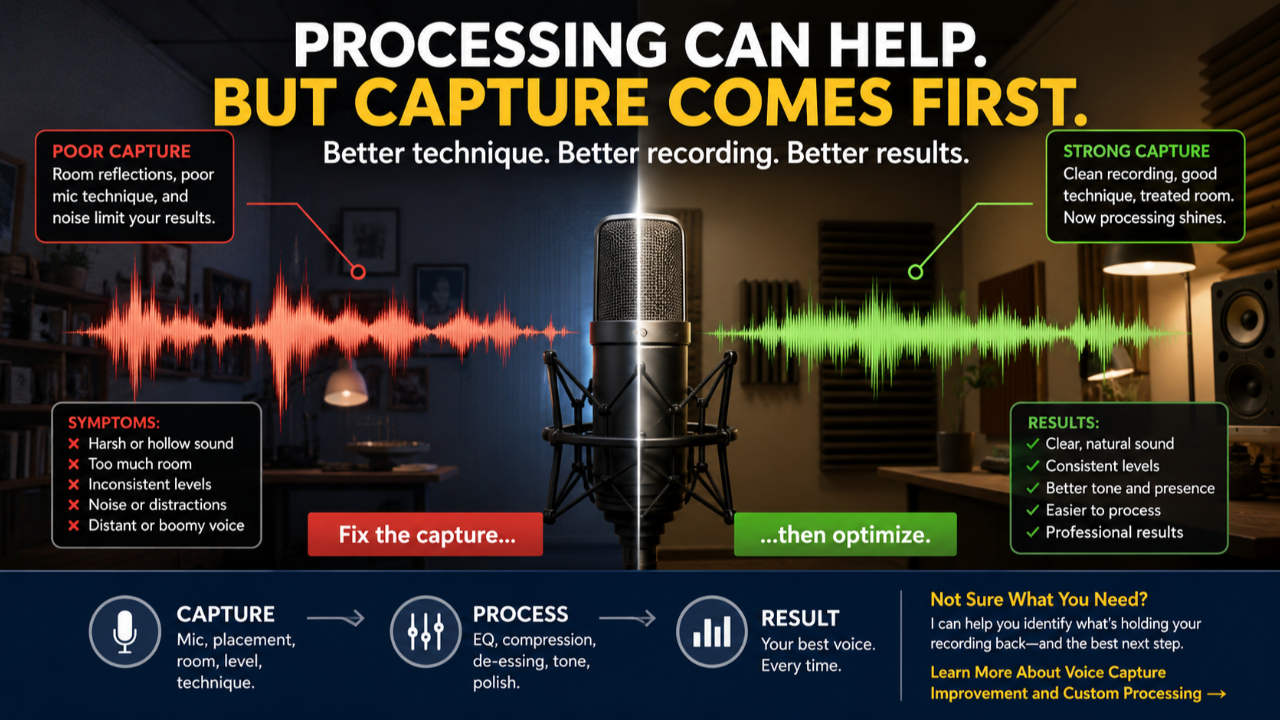
One of the most common problems I hear from voice actors is this:
They know their recordings don’t sound quite right, but they’re not sure why.
Maybe the voice sounds distant, boxy, harsh, thin, inconsistent, noisy, or overly reflective. Sometimes the assumption is that better processing will solv...
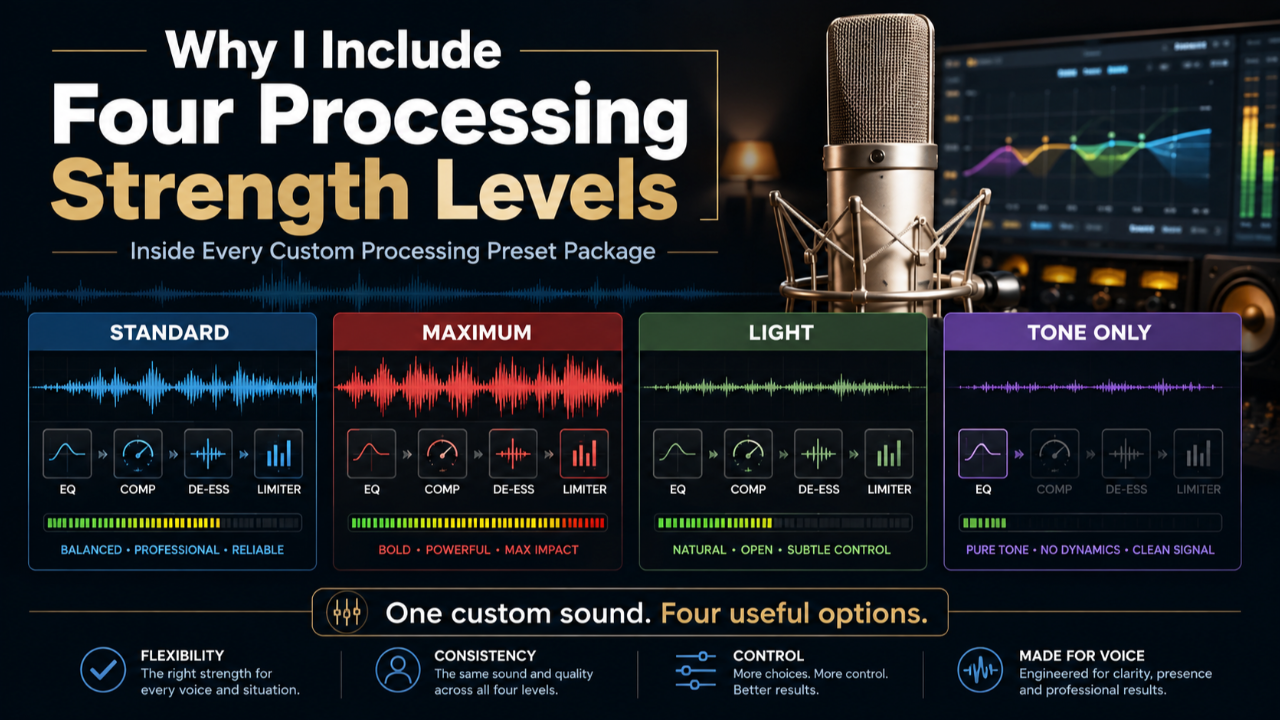
One of the most important parts of my Custom Processing Preset package is something I call the Strength Level Package.
Instead of giving you one processing chain and expecting it to work equally well for every type of recording, I create four related versions of your custom setting:
- Standard
- Ma...