
Lenny B’s Knowledge Library for Creators
Real-world guidance on audio, voice, workflow, positioning, business, marketing, and audience growth—built from the problems I solve, the systems I use, and the lessons I’ve learned helping creators turn their skills into stronger work and better opportunities.
If you are a voice-over artist, how do you know if your voice-over recording quality sound is professional? You might think, how do I know if my voice-over sound is competitive? How do I know if my voice-over recording quality prevents me from winning auditions? In this video, I answer that quest...
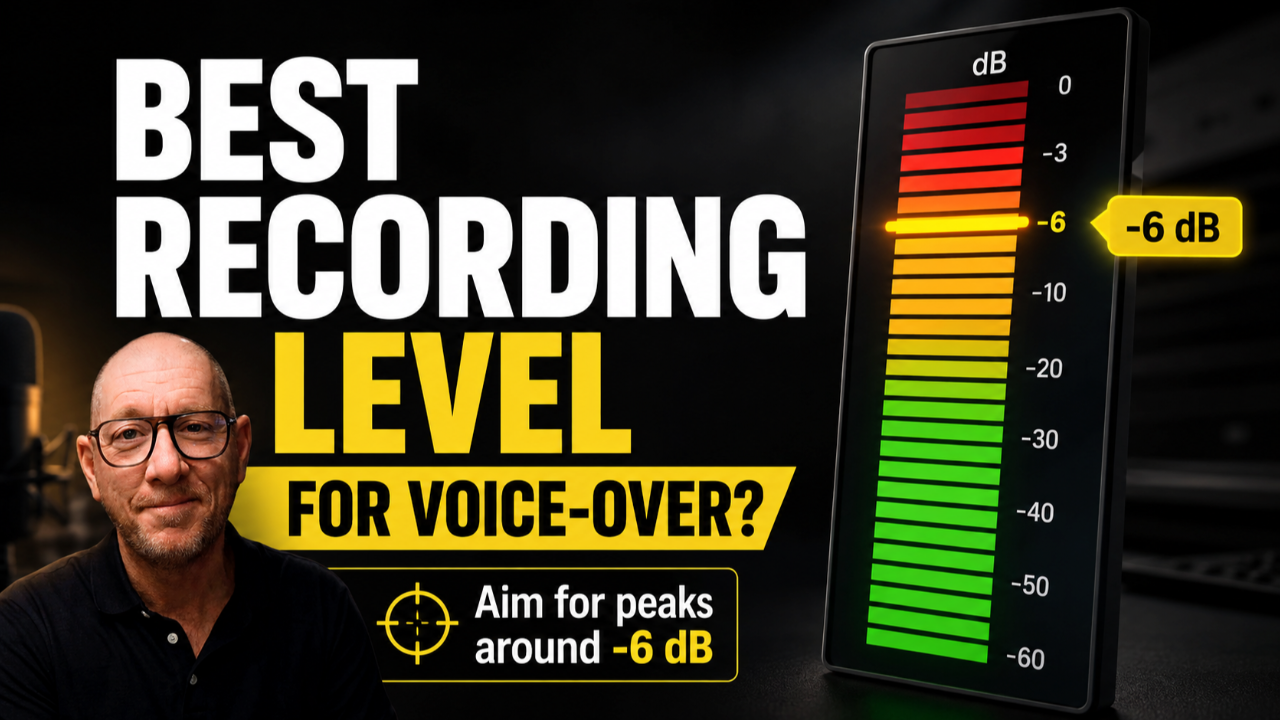
There are a lot of different recommendations about the “best” recording level for voice-over, and that can make something fairly simple feel confusing. My approach is to set the input gain on your preamp or audio interface so that your strongest natural peaks land as close as possible to –6 dB witho...

The fourth stage of Voice-Over production workflow is Mastering, which occurs at the end of your production process. You must record, edit, process, increase the loudness, and deliver your voice-over audio recordings in a specific order. Failing to follow the proper order and procedure may result in...

Can plugins fix my untreated room echo?
One of my most popular requests is to resolve someone's room echo in their voice-over recordings. This challenge is prevalent, especially for beginning voice-over artists recording from home.
Can plugins be used to fix an untreated room echo? Here is the ans...

Can Acoustic Treatment Fix a Boxy Voice Recording?
If your voice recording sounds boxy, muddy, hollow, or overly thick in the low-mid frequencies, the recording space may be contributing more to the problem than the microphone itself.
Your microphone captures the direct sound of your voice, but i...
How do you improve your voice-over recording quality? How do some voice-over artists achieve an excellent recording sound for film, broadcast, and other professional productions? What is the secret to producing professional-level voice-over productions from a home studio? The answer is It's All A...
Audio normalization is one of those features that looks simple but is often misunderstood.
At its most basic, normalization changes the gain of an audio file so its highest peak reaches a target level. It does not compress the audio, change its tone, or automatically make a recording sound better....
Excellent Voice-over recording quality is not easy to achieve, especially when recording in your home studio. There are several essential items that you need if you want to acquire a professional sound. The most essential ingredient you need is the acoustic treatment for your recording space. ...

The Avalon Designs VT-737SP is one of the most recognizable channel strips in professional audio. It combines a tube microphone preamp, EQ, and compressor, and it has developed a reputation for a warm, polished, larger-than-life sound.
But what does that actually mean on a voice?
In the video bel...

A channel strip processor by Behringer called the Ultravoice UV1 competes in the voice recording market. The processor is highly similar to the famous DBX 286s channel strip. However, the Behringer Ultravoice UV1 has added features like an on/off switch and an XLR/Line input jack on the front panel....

If your voice recording sounds boxy, muddy, hollow, or overly thick in the low-mid frequencies, it is easy to assume the microphone is the problem. In many cases, it is not. A boxy sound is often caused by the way your voice interacts with the room before the microphone captures it.
Your microphone...

In this video, I work on a project from my client Marisa Urtado, a young voice-over artist focusing on animation and video game work. First, I review why a proper recording level is critical for sound quality. Then, I will walk you through the plugin preset I've created for Marisa using the Waves Sc...