How to Make Your Voiceover More Engaging: Taste the Pepperoni
Oct 22, 2026
You can record at the right level, apply excellent processing, and deliver a technically clean file—and still leave the listener feeling very little.
The words are clear. The volume is appropriate. But something is missing.
Are you connecting with what you’re saying?
When I help someone with their recordings, we often spend time on microphone placement, recording levels, processing, and mastering. Those things matter. But once we have the technical side working, there’s another question:
What do you want the person listening to experience?
One of my favorite ways to explain this is a phrase I’ve used for years:
Taste the pepperoni.
Give the words something real to describe
Imagine you’re recording a commercial for a pizza restaurant.
You’re describing a pizza with sausage and pepperoni. You can pronounce those words correctly, emphasize them, and put some energy into your voice.
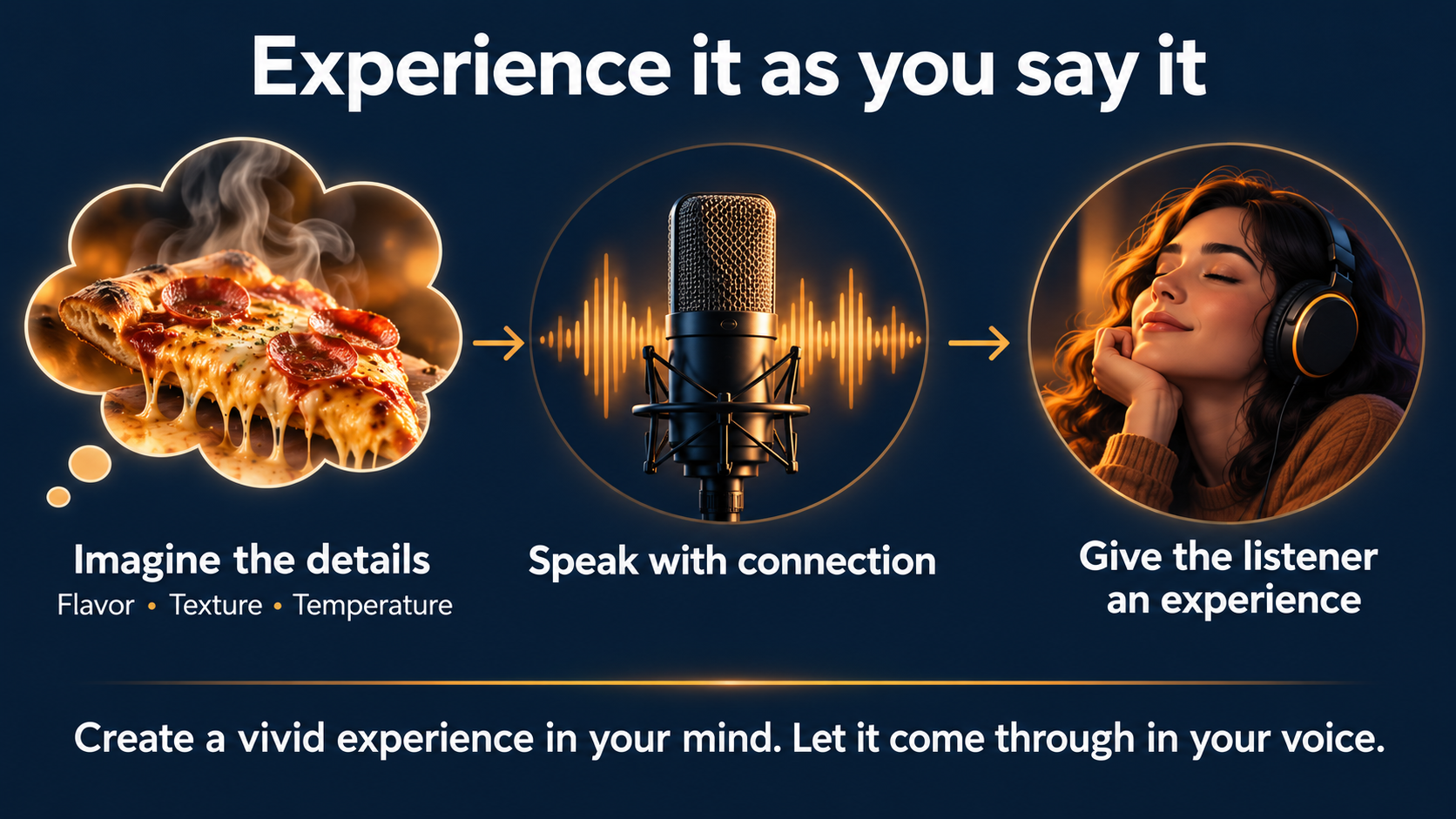
But can you taste the pepperoni when you say it?
Imagine the flavor, the texture, and the experience of taking a bite. Feel the temperature. Imagine the mixture of ingredients between your tongue, your teeth, and the roof of your mouth—the melted cheese, the pepperoni, the crust.
Create that experience in your mind. Picture the details and imagine the sensations actually happening as you say the words.
That’s what I mean by “taste the pepperoni.” Give the script real images and experiences to connect with, and keep that connection alive while you deliver the line.
In my experience, that connection comes through in your performance. The words have more conviction because there’s something behind them. You’re giving the listener a sense of what the experience means to you.
This is a practical direction I use when coaching: give your imagination something specific to work with, then let that experience come through in your voice.
When you experience the words as you say them, you give your listener a better chance to experience them, too.
It works beyond a pizza commercial
During a recent coaching conversation, we moved from discussing the engineering of a recording to the meaning behind the read.
The word we were working with was “heritage.”
That’s an easy word to say without giving it much thought. But what does it bring to mind?
Your grandparents? A family tradition? Something passed from one generation to the next?
Those ideas carry different feelings. Once you imagine something specific, you have a reason to say the word a particular way.
The same principle applies to many kinds of recording.
An audiobook narrator might need to understand what a character fears losing. A business owner might be explaining the frustration their customer wants to solve. A podcast host might be sharing something that changed their perspective.
You don’t need to manufacture a dramatic emotion for every sentence. You need to understand what the words mean and why they matter to the person listening.
More energy isn’t always the answer
When a read feels disconnected, it’s tempting to make it bigger.
Speak louder. Smile more. Emphasize more words.
Those choices can change the delivery. But first, give yourself something to respond to.
If you’re describing a delicious meal, imagine enjoying it. If you’re explaining a difficult problem, think about what it feels like to face it. If you’re offering reassurance, picture the person who needs to hear it.
The appropriate delivery may be warm, restrained, curious, excited, or serious. The meaning and the situation should help you decide.
“Taste the pepperoni” is a reminder to feel what you’re describing.
Get the engineering ready, then give the performance your attention
In that coaching conversation, we had been working through levels, limiting, and other production decisions.
It’s understandable that those details can stay in your head when you start performing. You’re trying to remember everything and do it correctly.
But the listener came for the message.
Build a reliable recording workflow so you can give your attention to delivering it. You can evaluate the technical details afterward.
A clean recording helps the listener hear you. Your performance gives them a reason to keep listening.
If you’re unsure which part needs attention, I explain the distinction in Do You Need Better Recording Technique, Better Processing, or Both?.
Try this on your next recording
Choose a short passage and find one word or idea that carries its meaning.
Before recording, ask yourself:
- What does this bring to mind?
- What can I picture, remember, or experience?
- Who am I speaking to, and why would this matter to them?
Then record the passage with that picture in mind.
Listen back for the meaning. Do you believe what you’re hearing? Does the delivery help you experience what the words describe?
You’re developing a connection between the words, your imagination, and the person listening.
That’s something a microphone or plugin can help capture and communicate. It starts with you.
Hear the idea demonstrated
I walk through this approach in my video, Script Direction That Actually Works | Confident Voice Over Reads. The “Taste the Pepperoni” example begins around 2:18.
Before your next take, get the technical setup ready. Then give yourself a moment to imagine what you’re saying.
Taste the pepperoni—and give your listener something to experience.